Want to win more jobs with less effort?
Grow your business and send quick quotes with our home service software.

Want to see your potential revenue?
See what businesses like yours earn with Housecall Pro in 1 - 2 minutes.

Every service business has to raise prices eventually. As your costs go up and your expertise grows, your rates need to reflect the value you’re actually delivering. Customers usually understand that—they just need you to explain it clearly so they know exactly what they’re paying for.
In this guide, we’ll explain how to communicate price increases to customers using clear letters, emails, texts, and scripts. We’ll cover timing, messaging, common mistakes, and practical strategies to reduce pushback. You’ll also find ready-to-use templates for standard updates, recurring services, longtime customers, SMS announcements, and in-person conversations.
Quick answer: How do you write a price increase letter to customers?
Start with the new price and the effective date to make the change clear from the start. Then, briefly explain why the price is increasing, keep the tone respectful, and close by thanking the customer for their business. Before sending it, check that the message is concise, easy to understand, and gives enough advance notice. The goal is to communicate the change clearly without making the letter feel abrupt or overly detailed.
Key takeaways:
Here are some quick tips to help you communicate price increases:
Lean on your tools: Automated texts, emails, and updated price books help you roll out new pricing smoothly without slowing down your day.
Build trust with advanced notice: Giving a heads-up strengthens customer relationships and reduces pushback.
Keep explanations simple: Clear, plainspoken reasons help customers understand the price change without getting lost in the details
Use templates to stay consistent: Reusable messages save you time and make every future price update easier to roll out.
Table of contents
- What is a price increase letter?
- Why do businesses raise prices?
- Signs it’s time to increase your prices
- When to send a price increase notice
- How to tell customers you're raising prices
- How to write a price increase letter: Templates you can copy
- How much notice should you give before raising prices?
- How to reduce pushback from customers
- Common mistakes to avoid
What is a price increase letter?
A price increase letter is a message that tells customers your rates are changing. It explains what is changing, when the new price takes effect, and usually provides a brief reason for the update. It can be sent by email, text, letter, or invoice message, depending on how you normally communicate with customers.
The format matters less than the clarity. A customer should be able to glance at the message and understand the new rate, the timing, and whether anything else about the service is changing.
Why do businesses raise prices?
Businesses raise prices when the cost of delivering the service increases or when existing pricing no longer adequately supports the business. Rising labor, materials, fuel, equipment, insurance, and admin overhead costs can create pressure over time. In some cases, prices also need to increase because the original rate was set too low or hasn’t been reviewed in a long time.
A price increase doesn’t need to sound dramatic. In most cases, it is simply part of keeping the business sustainable and maintaining consistent service quality.
If you’re reviewing your pricing overall, check out our pricing guides for competitive benchmarks and clear steps on how to set your rates:
- How to price HVAC services
- How to price plumbing jobs
- How to price electrical work
- How to price handyman jobs
- How to price lawn care and mowing services
- How much to charge for house cleaning
Signs it’s time to increase your prices
Raising your prices isn’t just about chasing bigger profits—it’s about covering rising costs and positioning yourself as a high-quality service provider. Here are some signs it’s time to update your pricing:
- Rising operational costs: When materials, labor, or overhead costs go up, a price increase keeps your business sustainable and protects your margins.
- Market and competition changes: Keep an eye on competitors. If they raise prices, it could be a cue to adjust yours too—without undercutting the quality and service you deliver.
- Attracting higher-value clients: Higher prices can signal higher-quality service, helping you bring in clients willing to pay more for top-notch work.
- Growing demand: If more customers want your services, a price increase reflects the value you provide and helps balance supply with demand.
When to send a price increase notice
Send a price increase notice before the new pricing takes effect, rather than at the same time you bill the customer.
Most pros send notices:
- 30–60 days before prices change
- Before upcoming renewals or recurring visits
- Whenever material or labor costs rise significantly
If your business uses recurring visits or maintenance plans, make sure your recurring service plans remain aligned with your updated pricing.
How to tell customers you’re raising prices
Telling customers about a price increase doesn’t need to feel awkward or defensive. Clear language and a calm tone usually work better than a long explanation. “The best advice I ever got was, ‘Your reputation is your business,” says Danny Reddick, founder and president of Reddick & Sons, a Virginia-based HVAC, electrical, and plumbing business.
Being transparent about pricing is a big part of maintaining that reputation. The clearer you are about the new rate, the timing, and what stays the same, the easier it is for customers to understand and accept.
A strong price increase message should do five things:
- Say what is changing: Name the new price or rate clearly.
- Say when it starts: Include the effective date.
- Give a short reason: Tie it to rising costs, service quality, or operational needs.
- Keep the tone professional: Don’t over-apologize or over-explain.
- Thank the customer: Show appreciation for their business.
With Housecall Pro, you can send automated emails and texts to notify all your customers at once.
How to write a price increase letter: Templates you can copy
These price increase email templates and scripts work for any home service business. Replace the placeholders with your details and adjust the tone to fit your customers.
Standard price increase letter example
Use this for yearly increases or general operating-cost changes.
Subject: Update to our service pricing
Hi [Customer Name],
I hope you’re doing well. We’ve been reviewing our pricing to keep up with rising costs for materials, labor, and operations. To continue providing the level of service you expect, our rates will increase starting [Date].
Your new price for [Service] will be [New Price].
We appreciate your trust and want this change to feel as smooth as possible. If you have any questions, we’re here to help.
Thank you,
[Your Business Name]
Price increase letter for recurring customers
Use for maintenance plans, subscription-style services, or scheduled visits.
Subject: Important update to your service plan
Hi [Customer Name],
Thank you for being part of our recurring service program. To keep delivering reliable service and high-quality work, we’re updating our pricing for all recurring customers starting [Date].
Your new rate will be [New Price] per [Visit/Month/Quarter]. Your service schedule will remain exactly the same.
We value your loyalty and appreciate the opportunity to continue serving you. If you have any questions, feel free to reach out.
Thanks again,
[Your Business Name]
Loyalty-focused price increase letter
Use a softer approach for long-time customers.
Subject: Small update to your service pricing
Hi [Customer Name],
I wanted to personally reach out because you’ve been with us a long time. To keep up with rising business costs, we’re making a small pricing adjustment starting [Date].
Your updated price will be [New Price], which reflects a discounted loyalty rate we’re offering to long-time customers.
Your support means a lot to us. If you’d like to review your services or talk through options, I’m here to help.
Warm regards,
[Your Business Name]
Short text message example
Great for quick communication or customers who prefer SMS.
Hi [Name], this is [Business]. We’re updating our service pricing starting [Date]. Your new rate for [Service] will be [New Price]. Text us if you have questions.
In-person script
Use this for face-to-face conversations or phone calls.
“I wanted to give you a quick heads-up that our pricing is changing on [Date]. Because our costs for materials and labor have increased, your new price for [Service] will be [New Price]. I wanted to tell you personally and make sure you had time to prepare. If you have any questions, I’m happy to walk you through everything.”
How much notice should you give before raising prices?
The right amount of notice depends on the type of customer relationship and the kind of service you provide, but 30 to 60 days is a standard window cited in field service management resources. Recurring customers, contract clients, and higher-value service relationships usually benefit from more notice rather than less.
Shorter notice can work for one-off or less frequent customers, but even then, clarity matters. A calm message ahead of the change almost always lands better than a surprise update on the invoice.
If the increase is significant, you might decide to:
- Temporarily grandfather existing customers
- Offer a loyalty discount
- Phase in the increase over a few visits
As a rough guide, increases under 10% rarely need these strategies; increases of 15% or more on long-term recurring customers are usually worth phasing in or pairing with a loyalty acknowledgment.
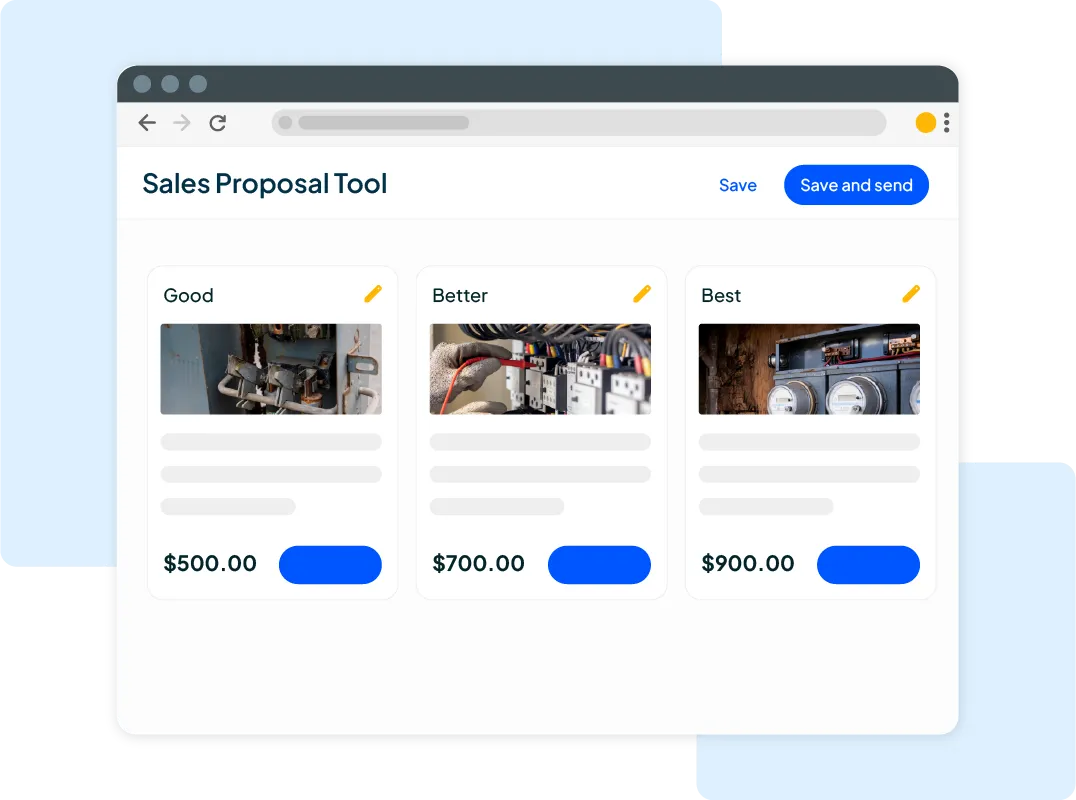
Pro tip: If you’re adjusting prices as part of a broader business update, you may find it helpful to streamline your workflow with tools like digital estimates and online scheduling so customers see your updated pricing before booking.
How to reduce pushback from customers
Customers tend to accept price increases when the communication is clear. You don’t need to justify every detail—you just need to be confident.
Here are simple ways to make the update easier:
- Give notice early: Don’t wait until the last minute.
- Keep the explanation short: One or two clear reasons are enough.
- Avoid sounding uncertain: Present the update as a normal business change.
- Show consistency: Make sure your estimate, invoice, and customer message all match.
- Focus on value: Remind customers what they still get from working with you.
Pro tip: Updating your rates in Housecall Pro’s Price book ensures all new estimates and invoices show the new price automatically, helping you avoid inconsistencies and friction.
Common mistakes to avoid
Price increase messages usually create more friction when they are vague, too long, or harder to follow than they need to be. A customer shouldn’t have to read the message twice just to figure out what changed or when the new price starts.
Common mistakes include:
- Burying the price change too far down: Customers should be able to spot the new rate quickly.
- Leaving out the effective date: The customer needs to know exactly when the new pricing begins.
- Over-explaining the reason: A short explanation is usually enough.
- Sounding defensive or uncertain: The message should feel clear, calm, and professional.
- Sending inconsistent pricing across systems: Estimates, recurring services, and customer messages should all match.
- Forgetting to update recurring services or estimates: Old pricing left in the system can create confusion and pushback.
Clear, consistent communication keeps everything running smoothly.
Get In Touch: 858-842-5746
Let us earn your trust
On average, Pros increase monthly revenue generated through Housecall Pro by more than 35% after their first year.
See plan options and feature breakdown on our pricing page.
How Housecall Pro helps you manage pricing updates
Price increases are easier to communicate when your pricing, customer messages, and recurring services all stay in sync. If you are updating rates across multiple customers or service plans, the process gets much easier when everything is organized in one place.
Housecall Pro helps you roll out price increases without creating extra admin work. Instead of manually updating pricing and sending one-off messages each time, you can keep estimates, recurring services, and customer communication aligned.
With Housecall Pro’s field service software, you can:
- Avoid manually updating pricing across every service: Keep rates current with price book software so new estimates reflect changes automatically.
- Notify all customers at once without drafting individual messages: Use bulk email and text tools to send consistent, professional announcements.
- Prevent old rates from appearing on recurring jobs: Align ongoing service plans with updated pricing so nothing slips through.
- Make sure customers see new pricing before they book: Send professional estimates that show updated rates upfront.
- Keep approvals, messages, and pricing in one place: Manage the full rollout through job management software without switching between systems.
Start your free trial of Housecall Pro today and see how easy it is to keep your pricing consistent, professional, and stress-free.
Price increase letter FAQ
-
How much notice should you give before raising prices?
-
Many service businesses give customers about 30 to 60 days’ notice before a price increase takes effect. Giving advance notice usually helps reduce pushback, especially for recurring services or long-term customer relationships.
-
What should you say in a price increase letter?
-
A price increase letter should include the new price, the effective date, a short explanation for the increase, and a thank-you to the customer. For instance: “Starting March 1, your rate for lawn maintenance will increase from $85 to $95. This reflects higher labor and fuel costs. Thank you for your continued business.” That’s all most customers need.
-
How do you tell recurring customers about a price increase?
-
When telling recurring customers about a price increase, explain the updated rate, the date it starts, and whether the service schedule or scope is staying the same. If the only change is pricing, say that clearly so the customer understands what to expect.
-
Should you explain why prices are increasing?
-
Yes, but the explanation should stay brief. In most cases, one or two sentences tied to rising labor, material, fuel, or operating costs are enough. A line like, “This reflects increased costs for labor, materials, and fuel over the past year” is enough for most customers. A longer explanation usually doesn’t make the message more effective.
-
Can you raise prices without losing customers?
-
Yes, especially when the increase is communicated clearly and the customer already trusts the quality of your work. Clear notice, a professional tone, and consistent messaging all make it easier to raise prices without damaging the relationship.
-
How do you reduce customer pushback when raising prices?
-
Give at least 30 days’ notice, state the new price clearly in the first sentence, and avoid over-explaining. Customers are more likely to accept increases from businesses they trust, so a calm, professional tone matters as much as the content. If the increase is 15% or more, consider offering to phase it in over two billing cycles for long-term customers.