Want to win more jobs with less effort?
Grow your business and send quick quotes with our home service software.

Want to see your potential revenue?
See what businesses like yours earn with Housecall Pro in 1 - 2 minutes.
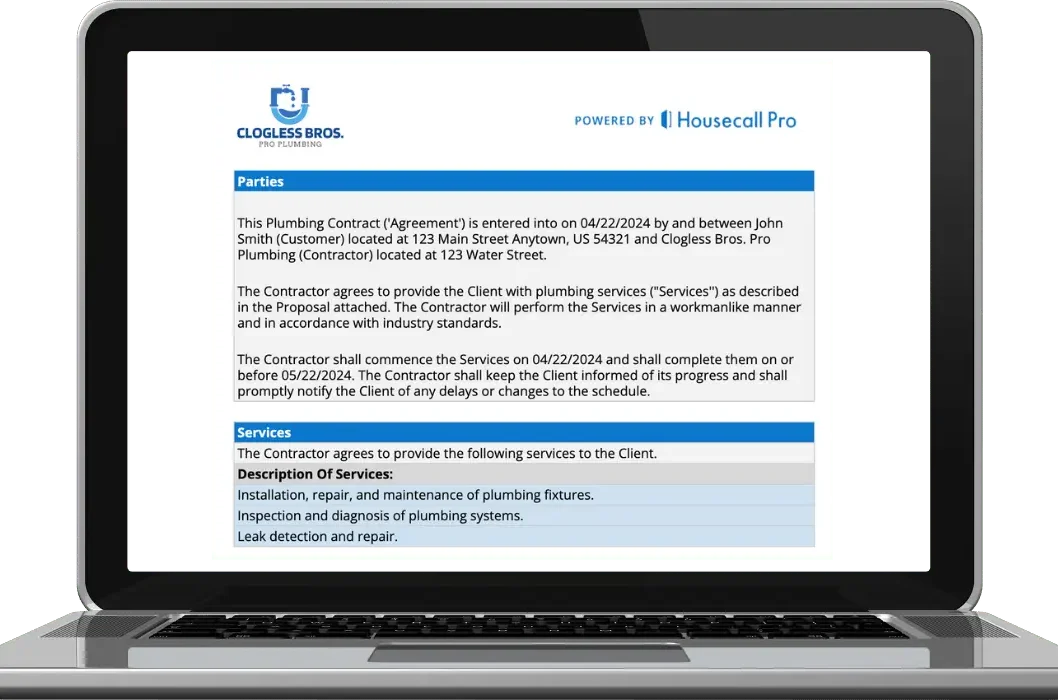
Whether you’re fixing a leaky pipe, tackling a full repipe, or setting up a long-term maintenance plan, a plumbing contract makes everything clear. It spells out the scope, pricing, timelines, and warranties so both you and your customer know exactly what to expect—preventing the kind of misunderstandings that turn a simple water-heater install into a week of “but I thought that was included.”
In this guide, you’ll learn common plumbing contract types and when to use them, what details to include, and how to create a simple contract process.
→ Want a head start? Download our plumbing contract template with customizable branding and pre-filled fields.
Key takeaways
Follow these steps when creating a new plumbing contract:
Choose the right contract type: Use service agreements, maintenance plans, financing contracts, or extended warranties depending on the job.
Include all essential details: Document business and client info, scope of work, materials, timelines, pricing, warranties, liability, and termination rules.
Follow a repeatable contract process:: Gather info, define scope, list materials, set service frequency, establish pricing, add warranties, and collect signatures.
Leverage digital tools: Use Housecall Pro to create contracts, collect e-signatures, automate renewals, link to invoices, and save reusable templates.
Jump ahead
- Common types of plumbing contracts
- What should you include in a plumbing contract?
- How to create a plumbing contract (step-by-step)
- Step 1: Gather client and business information
- Step 2: Define the scope of work
- Step 3: List materials and equipment covered
- Step 4: Set service frequency and duration
- Step 5: Establish pricing and payment terms
- Step 6: Include warranty and liability information
- Step 7: Add termination clauses
- Step 8: Include signatures and dates
- Step 9: Review and customize
- How Housecall Pro’s plumbing software can help
Common types of plumbing contracts
Plumbing companies use a few different contracts depending on the job. Using the right contract helps protect your business and reduce misunderstandings. Here are the most common types.
Plumbing service agreement
A plumbing service agreement is used for one-time jobs like repairs, fixture replacements, leak diagnostics, or water-heater installs. This contract outlines the scope of work, materials, pricing, timeline, and warranty terms so customers know exactly what’s included. It’s the most common plumbing contract for residential and commercial service calls.
Plumbing maintenance contract
A plumbing maintenance contract covers recurring services like annual inspections, drain cleaning, water-heater flushes, or whole-home plumbing checkups. These agreements support recurring revenue, reduce emergency calls, and strengthen long-term customer relationships.
→ Use our plumbing maintenance contract template to create standardized yearly or seasonal plans.
Plumbing financing or payment plan agreements
A plumbing financing contract allows customers to pay for large plumbing projects in installments rather than all at once. This contract type outlines the payment schedule, financing terms, interest or fees, and consequences for missed payments. Financing agreements are common for repipe jobs, sewer line replacements, and tankless water-heater upgrades.
Extended plumbing warranty or protection plan contracts
Extended warranty contracts provide coverage beyond standard manufacturer warranties. They explain what plumbing systems or equipment are protected, how long the coverage lasts, and what exclusions apply. Plumbers often add these contracts when installing major equipment like tankless units, water softeners, sump pumps, and filtration systems.
What should you include in a plumbing contract?
A strong plumbing contract is detailed but easy to read. Here’s what every agreement should include.
- Business and client details: Include legal names, addresses, license numbers, and contact information. This identifies both parties clearly.
- Scope of work: Spell out exactly what you’ll do—and what you won’t. Include tasks, materials, exclusions, clean-up procedures, and any required permits.
- Materials/equipment covered: List brands, models, quantities, and whether the contractor or customer supplies materials. Explain how substitutions or upgrades are handled.
- Frequency or duration of service: For maintenance plans, define visit frequency and contract length. For project-based work, include estimated timelines and milestone dates.
- Pricing and payment terms: Outline deposits, milestones, hourly versus flat-rate pricing, financing options, and late-payment rules.
Pro tip: Connect pricing directly to invoices with job costing. - Warranty/liability: Explain workmanship warranties, manufacturer warranties, and limits on your liability.
- Termination clauses: State how either party can end the agreement, the notice required, and what happens to deposits or partially completed work.
- Signatures and dates: Include fields for both parties.
Get In Touch: 858-842-5746
Let us earn your trust
On average, Pros increase monthly revenue generated through Housecall Pro by more than 35% after their first year.
See plan options and feature breakdown on our pricing page.
How to create a plumbing contract (step-by-step)
Creating a plumbing contract is easier when you follow a repeatable workflow. This step-by-step process helps you build clear, professional agreements that protect your business while giving customers confidence in the job.
Step 1: Gather client and business information
Start by collecting correct names, addresses, job site locations, and contact details for every party involved. Include your license numbers and business information so the contract is legally complete. Accurate data prevents disputes later and ensures customers can verify your credentials.
Step 2: Define the scope of work
Describe the plumbing tasks you’ll complete, including diagnostic steps, installation or repair work, necessary materials, and cleanup procedures. Be specific about what’s included and what’s not—this is the heart of the plumbing contract. A clear scope prevents misunderstandings, unexpected extra work, and costly callbacks.
Step 3: List materials and equipment covered
Include exact brands, models, sizes, quantities, and any equipment needed for the job. Specify whether materials are supplied by you or the customer, and outline how substitutions or upgrades will be approved. Detailed material lists protect your margins and help avoid “I thought that was included” conversations.
Step 4: Set service frequency and duration
If the contract covers recurring maintenance, define how often your team will visit and how long the agreement lasts. For one-time plumbing projects, outline the expected timeline and any milestone dates. Customers appreciate transparency, especially for multi-day or multi-phase plumbing work.
Step 5: Establish pricing and payment terms
Break down labor, parts, deposits, financing options, and any additional charges such as disposal fees or after-hours work. Include late-payment rules, installment information, and change-order procedures so everything is documented. Clear pricing builds trust and protects your cash flow.
Step 6: Include warranty and liability information
Explain your workmanship warranty, what it covers, how long it lasts, and conditions that may void it. Include manufacturer warranty details for water heaters, fixtures, pumps, or filtration systems. Clear liability language protects your business and sets realistic expectations for the customer.
Step 7: Add termination clauses
Show how either party can end the contract, how much notice is required, and what happens to deposits or completed work. This section is essential for multi-visit maintenance plans and large plumbing projects.
Step 8: Include signatures and dates
Make room for both parties to sign and date the agreement. This protects you legally if a dispute arises. Use digital e-signatures to speed up approvals and create a clean audit trail.
Step 9: Review and customize
Look over the full document for accuracy and adjust terms based on project complexity, local regulations, or specialty work. Saving customized versions inside Housecall Pro allows you to reuse the structure for similar plumbing jobs and cut paperwork time dramatically.
→ Pro tip: Save custom contract templates inside Housecall Pro and reuse them for similar jobs.
How Housecall Pro’s plumbing software can help
Managing plumbing contracts manually takes time, and every extra hour spent chasing signatures or tracking renewals is an hour not spent on billable work. Housecall Pro streamlines your entire contract workflow so you can create, send, sign, renew, and track agreements without administrative headaches.
With our plumbing software, you can:
- Create and store digital contracts: Build contracts from reusable templates and store them directly inside each customer profile. This keeps every agreement organized and easy to access for future jobs.
- Collect e-signatures on-site or remotely: Send contracts by text or email, or have customers sign right from the app. Digital signatures speed up approvals and eliminate paperwork delays.
- Automate recurring maintenance contracts: Use recurring service plans to schedule routine visits automatically. Contracts renew on time, and customers stay on track with recommended maintenance.
- Link contracts to invoices and payments: Connect your agreements seamlessly to invoicing and payments so pricing, job costing, and customer billing are accurate and consistent.
- Track renewals and expirations: Set automated reminders to notify you before agreements expire, helping you renew customers proactively and retain long-term revenue.
Start simplifying contract management today. Try Housecall Pro free for 14 days.